To whip double cream successfully, keep the cream cold, use a clean bowl and stop as soon as it reaches the texture you need. Start slowly to control splashes, increase to a moderate speed as the cream thickens, then reduce the speed near the end. The change from soft peaks to over-whipped cream can happen quickly, so judge it by appearance rather than the clock.
What You Need
- Cold double cream
- A clean, dry mixing bowl with enough room for the cream to expand
- A balloon whisk, electric hand mixer or stand mixer with a whisk attachment
- Optional icing sugar, vanilla or another suitable flavouring
For a manageable batch, 300ml of double cream is a useful starting quantity. Avoid filling the bowl too deeply because the whisk needs space to move through the cream and incorporate air.
UK compositional rules describe double cream as containing at least 48% milk fat and whipping cream as containing at least 35%. Both can be whipped, although double cream becomes thick quickly because of its higher fat content. Single cream does not contain enough fat to form stable whipped peaks.
How to Whip Double Cream With an Electric Mixer
- Keep everything cold. Take the cream from the fridge only when you are ready to begin. A cool bowl is helpful in a warm kitchen, but the temperature of the cream matters most.
- Pour the cream into the bowl. Add any icing sugar or vanilla at this stage if you are using it.
- Begin at low speed. Whisk slowly until the surface is no longer completely liquid. This reduces splashing and gives you more control.
- Increase to medium speed. Continue whisking while watching the texture. The cream will become foamy, thicken and begin to leave trails behind the whisk.
- Slow down near the required stage. Check the cream frequently by lifting the whisk. Stop at soft, medium or stiff peaks according to how the cream will be used.
There is no single reliable whipping time. The quantity and temperature of the cream, bowl shape and mixer power all affect the result. Watching the texture is more dependable than setting a timer.
How to Whip Double Cream by Hand
Pour cold cream into a roomy bowl and use a balloon whisk to make steady circular or side-to-side strokes. As the cream thickens, slow down and lift the whisk regularly to check the peaks. Hand whisking takes more effort than using a mixer, but it gives close control near the final stage.
Do not use a narrow drinking glass or a bowl that is nearly full. A broad bowl allows the whisk to move freely and helps air enter the cream.
Soft, Medium and Stiff Peaks
Soft peaks
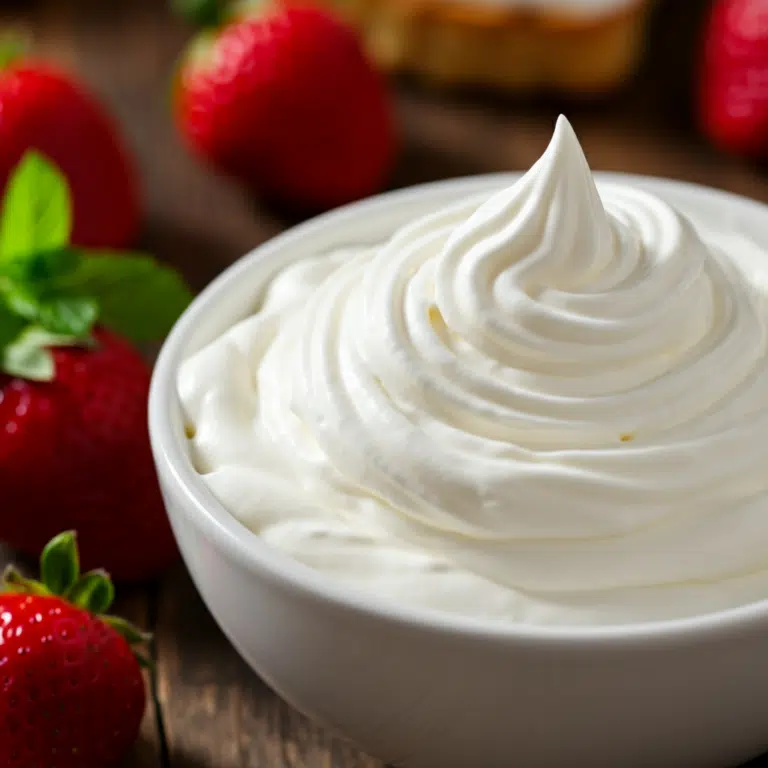
When the whisk is lifted, a soft peak forms and then folds back into the cream. The texture is light and spoonable. Soft peaks work well for folding into desserts or serving as a loose topping.
Medium peaks
Medium peaks hold visible ridges and keep more of their shape, but the tip still bends. This is a versatile stage for filling cakes, topping puddings and serving with fruit.
Stiff peaks
Stiff peaks stand upright when the whisk is lifted. The cream should still look smooth rather than grainy. This firmer texture is useful when the cream needs to hold its shape, but stop immediately because further mixing can separate the fat from the liquid.
How to Avoid Over-Whipping
Reduce the mixer speed once the cream begins to hold trails. Check it every few seconds and finish with a few turns of a hand whisk if necessary. High-speed mixing right to the end makes it easy to pass the required stage.
Signs of over-whipping include a grainy surface, clumps and liquid beginning to separate. If the cream is only slightly grainy, stop the mixer and gently fold in a small splash of cold, unwhipped double cream. Add a little at a time. Once distinct butterfat clumps and liquid have formed, the cream cannot be returned reliably to smooth whipped cream.
Why Double Cream Sometimes Will Not Whip
- The cream is too warm: return it to the fridge before trying again.
- The wrong product was used: single cream and ordinary plant drinks do not whip like double cream.
- The batch is too small for the equipment: a stand-mixer whisk may not reach a shallow amount of cream.
- The bowl or whisk is greasy or wet: start with clean, dry equipment.
- Too much liquid flavouring was added: concentrated flavourings are easier to incorporate without thinning the cream.
Adding Sugar and Flavour
Icing sugar dissolves more easily than granulated sugar and can be added before or during whipping. Start with a small amount, taste and adjust. Vanilla extract, finely grated citrus zest, sifted cocoa or a small amount of a concentrated flavouring can also be used.
Add acidic fruit juice cautiously because it can change the texture. Fold thicker fruit purees into cream that has already reached soft peaks rather than pouring a large quantity of liquid into unwhipped cream.
Using a Cream Dispenser
A compatible cream dispenser is an alternative when you need aerated cream that can be dispensed in portions. Strain the mixture so particles cannot block the nozzle, stay within the dispenser’s fill line and follow the manufacturer’s instructions for the exact model.
Only use compatible, food-grade cream chargers and never exceed the manufacturer’s specified charge. A dispenser method is different from whisking in a bowl, so do not use the visual peak stages above to judge cream while it is sealed inside the dispenser.
How to Store Whipped Double Cream
Whipped cream is a chilled dairy food. Cover it and return it to the fridge promptly. The Food Standards Agency recommends keeping a fridge at 5°C or below. Follow the use-by date and storage instructions on the original cream packaging, and discard the cream if it has been left warm for an unsafe period or shows signs of spoilage.
For the best texture, prepare whipped cream close to serving. It may lose volume or release liquid during storage, so there is no universal guarantee that it will remain suitable for decorating for a fixed number of hours.
Whipped cream can be frozen, but thawing often changes its texture. Freeze small portions only when that softer result will be acceptable, such as for adding to a hot drink or cooking, rather than for precise cake decoration.
Plant-Based Alternatives
Ordinary almond, oat and other plant drinks are not direct substitutes for double cream because they usually do not have the structure needed to hold whipped peaks. Choose a product specifically labelled as suitable for whipping and follow its package instructions. Some full-fat coconut products can also whip when properly chilled, but the result and flavour differ from dairy cream.
Frequently Asked Questions
Can double cream be whipped on its own?
Yes. Cold double cream can be whipped without sugar or stabilisers. Its high milk-fat content allows it to trap air and form peaks.
Should the bowl be chilled?
A chilled bowl can help in a warm kitchen, especially when using metal, but cold cream is the priority. Make sure the bowl and whisk are also clean and dry.
Why has my whipped cream turned grainy?
Graininess is usually an early sign of over-whipping. Stop immediately and gently fold in a small amount of cold, unwhipped double cream. If the mixture has separated into firm clumps and liquid, it has progressed towards butter.
Can single cream be whipped?
Single cream does not contain enough fat to form stable whipped peaks. Use double cream or a product sold as whipping cream instead.
Can whipped double cream be made in advance?
It can be prepared ahead for short-term refrigerated use, but its texture is best when freshly whipped. Keep it covered at 5°C or below, follow the original use-by date and check the consistency before serving.