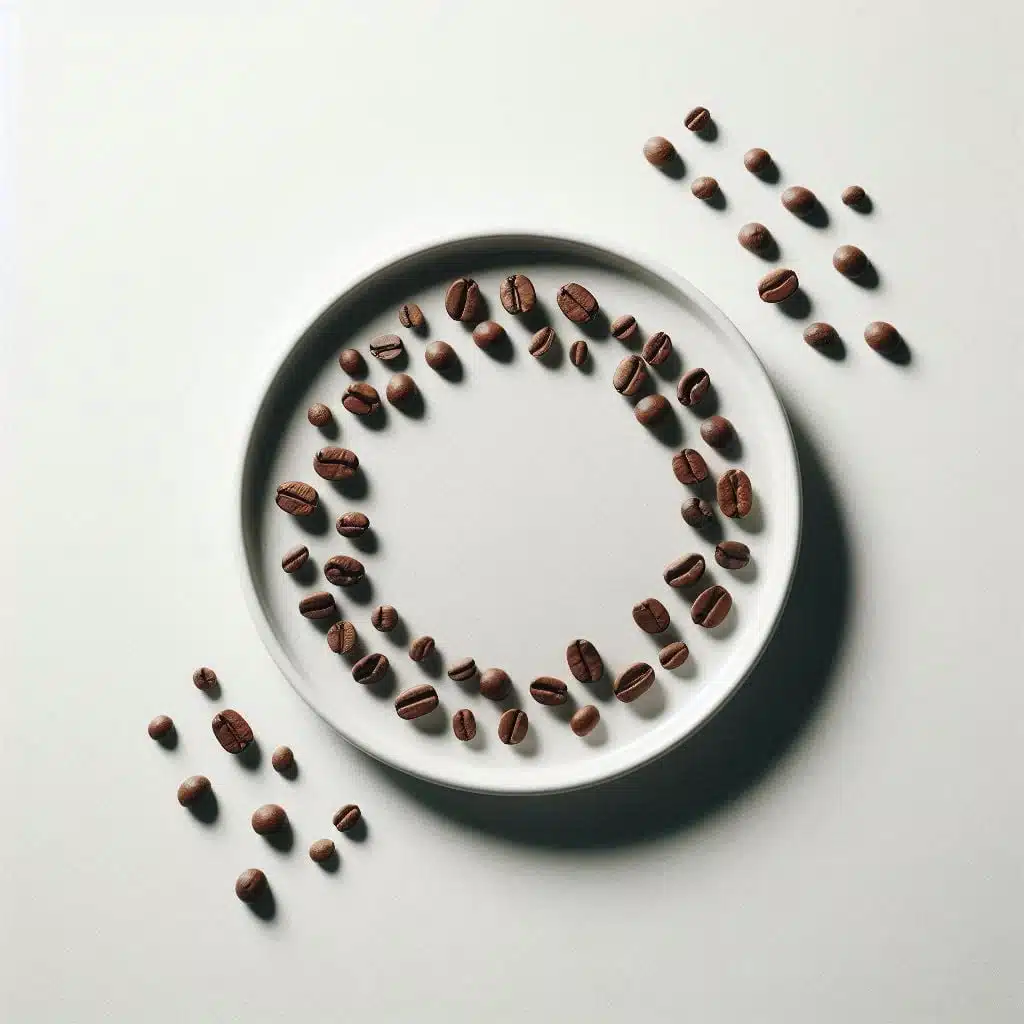
Coffee beans are the seeds of fruit produced by Coffea plants. The fruit is commonly called a coffee cherry and usually contains two seeds with their flat sides facing each other. Those seeds are processed, dried and roasted before they become the fragrant brown beans used to make coffee.
Coffea arabica originated in Ethiopia and nearby parts of northeast Africa. Coffee cultivation and trade later developed in Yemen, and the crop is now grown across tropical regions of Africa, Asia and the Americas.
Are coffee beans actually beans?
Botanically, coffee beans are seeds rather than true beans. They sit inside the coffee cherry beneath layers of skin, pulp and a protective parchment-like covering. Most cherries contain two seeds, although a small proportion contain one rounded seed known as a peaberry.
The name “coffee bean” probably became popular because the processed seed resembles familiar beans. It is now the standard everyday term used by growers, roasters and coffee drinkers.
What plant do coffee beans grow on?
Coffee comes from plants in the Coffea genus. These evergreen shrubs or small trees have glossy leaves and clusters of fragrant white flowers. After pollination, the flowers develop into green fruit that usually ripens to red or yellow, depending on the variety.
Farmers often prune coffee plants to make harvesting and plant care easier. Growing conditions vary by species and location, but altitude, temperature, rainfall, soil and shade can all influence plant health and the character of the harvested coffee.
Arabica, robusta and other coffee species
Arabica and canephora account for the great majority of coffee traded around the world, but they are not the only coffee species.
- Coffea arabica: commonly called arabica. It is associated with a wide range of aromas, acidity levels and flavour profiles. The species is native to Ethiopia and surrounding areas.
- Coffea canephora: the species commonly sold as robusta. It generally contains more caffeine than arabica and is widely used in espresso blends and soluble coffee.
- Other species and hybrids: coffee is a multi-species crop. Less widely traded species and hybrids can have regional importance and may help breeders respond to pests, disease and changing growing conditions.
Species alone does not determine whether a coffee tastes good. Variety, growing conditions, harvest quality, processing, storage, roasting and brewing all contribute to the final cup.
Did coffee originate in Ethiopia or Yemen?
Ethiopia and Yemen have different but connected places in coffee history. Arabica coffee is native to Ethiopia and nearby areas. Coffee plants or seeds later crossed the Red Sea to Yemen, where organised cultivation, drinking and trade became established.
The exact beginnings of coffee drinking are uncertain. Historical evidence becomes clearer in fifteenth-century Yemen, where Sufi communities used coffee and preparations made from the fruit. Yemen then became an important centre for cultivation and international trade.
What about Kaldi and his goats?
The story of Kaldi, an Ethiopian goatherd whose animals became lively after eating coffee cherries, is an origin legend rather than a verified historical record. It is best understood as folklore. The broader Ethiopian origin of arabica is supported by botanical and genetic evidence, but there is no reliable evidence that one named person discovered coffee in the way the story describes.
Where is coffee grown today?
Coffee is grown in tropical regions around the equator, often described as the coffee belt. It crosses parts of Central and South America, Africa, Asia and the Pacific. Conditions differ greatly within that broad belt, so two coffees from the same country can still taste very different.
The International Coffee Organization’s 2022/23 production figures placed Brazil and Vietnam first and second, followed by Indonesia, Colombia and Ethiopia. Rankings and harvest sizes change from year to year, so production claims should always be tied to a reporting period rather than treated as permanent.
Country of origin is only the start of the story. Region, farm, variety, altitude, harvest timing and processing method often provide more useful clues about a coffee than the country name alone.
How does a coffee cherry become a green coffee bean?
Ripe cherries may be picked selectively by hand or harvested with mechanical help, depending on the farm, terrain and production system. The fruit must then be processed so the seeds can be dried, stored and transported.
Natural process
Whole cherries are dried before the dried fruit layers are removed. Natural processing can contribute fruity or sweet sensory characteristics, but the result also depends on the coffee, fermentation, drying conditions and later roasting.
Washed process
The outer fruit is removed before the seeds are washed and dried. Fermentation or mechanical methods may be used to remove the sticky mucilage around the parchment. Washed coffees are often described as clear or bright, but no process guarantees one particular flavour.
Honey and pulped-natural processes
The skin and some pulp are removed while a chosen amount of mucilage remains during drying. Names and practices vary between producing countries, so the process label should be treated as useful context rather than a complete flavour prediction.
After drying, the remaining protective layers are removed at a dry mill. The unroasted seeds are then called green coffee. They can be graded, sorted, packed and shipped to a roaster.
What does roasting change?
Green coffee is dense and smells grassy rather than like a brewed cup. Roasting applies heat and triggers physical and chemical changes that create the colours, aromas and flavours associated with roasted coffee.
A lighter roast may preserve more of a coffee’s acidity and origin character, while a darker roast develops more roast-led flavours. That is a tendency, not a fixed rule: the green coffee, roaster and brewing method all matter.
Once roasted, beans gradually lose aroma and flavour through exposure to oxygen, heat, moisture and light. Our coffee bean storage guide explains how to keep them fresher, while our grinding guide covers matching grind size to a brewing method.
How origin affects coffee flavour
Origin can shape flavour, but it never acts alone. The most useful clues on a coffee label include:
- country and growing region;
- farm, cooperative or washing station;
- species and variety;
- altitude and harvest period;
- processing method;
- roast level and roast date.
These details help explain why one coffee may taste floral and tea-like while another is nutty, chocolatey or full-bodied. They describe tendencies rather than guarantees, because preparation and individual perception also affect the cup.
Explore our coffee bean range to compare origin, blend and roast information on current products.
Frequently asked questions
Do coffee beans come from cherry trees?
No. Coffee cherries grow on Coffea shrubs or small trees, not on the fruit trees that produce eating cherries. “Coffee cherry” is the common name for the coffee plant’s fruit.
Why are unroasted coffee beans green?
Once the fruit and protective layers are removed, the unroasted seed is known as green coffee. Its colour may range from green to blue-green or yellow-green depending on the coffee and processing. Roasting turns it brown.
Does every coffee cherry contain two beans?
No. Most contain two seeds, but some develop one rounded seed called a peaberry. Other cherries can contain more than two seeds or develop imperfectly.
Where do most coffee beans come from?
Brazil is the largest producer in the International Coffee Organization’s 2022/23 figures, with Vietnam second. Production changes by crop year, weather and market conditions, so use dated statistics when comparing countries.
Can you eat coffee beans?
Roasted coffee beans are edible, although they are hard and contain caffeine. Green coffee is much tougher and is not normally eaten as a snack. Read our guide to eating coffee beans for practical caffeine and safety considerations.
Are espresso beans a different species?
No. “Espresso bean” usually describes coffee roasted or blended for espresso. Espresso can be made from arabica, canephora or a blend, and the name does not identify a separate plant species.
Sources and further reading
- World Coffee Research: History of Arabica
- World Coffee Research: Ethiopia country profile
- Specialty Coffee Association: the history and uncertainty around early coffee drinking
- Specialty Coffee Association: coffee as a multi-species crop
- International Coffee Organization: World Coffee Statistics Database
- International Coffee Organization: Coffee Development Report 2022/23
Reviewed by Mr Harry, Product Specialist and Content Contributor. Last reviewed: 5 October 2026.